• PIOB Opens Global Search to Fill IESBA 2025 Board Vacancies

    English

    The Public Interest Oversight Board’s (PIOB) Standard-Setting Boards Nominations Committee has opened the Invitation for Application for upcoming vacancies on the International Ethics Standards Board for Accountants (IESBA) for terms beginning January 1, 2025. The application period is open until February 9, 2024.

    The Invitation for Application is extended to experienced individuals from diverse backgrounds wishing to contribute to setting high-quality, international ethics (including independence) standards on behalf of the public interest. In the current cycle, there are six vacancies to be filled from January 1, 2025, including potential re-appointments of five members. Applications are welcome from candidates from all sectors and constituencies, including investors, the corporate governance community, regulatory, oversight and policy-making bodies, national standard setters, preparers and practitioners, professional accountancy organizations, public and non-profit sectors, and academia. A parallel Invitation for Application was issued for the International Auditing and Assurance Standards Board (IAASB), with a concurrent deadline of February 9, 2024.

    These openings offer seasoned professionals from diverse backgrounds a chance to actively shape the IESBA's dynamic, multi-stakeholder environment. Successful candidates will play pivotal roles in maintaining the integrity of global financial markets and economies by contributing to the development of robust ethics (including independence) standards.

    For additional information on IESBA or IAASB nominations, please see the PIOB’s nominations web page or email SSBNominations@ipiob.org.

    IESBA Encourages All Qualified Candidates to Apply

  • Questions & Answers on the International Foundation for Ethics and Audit

    English

    Who is the Monitoring Group?

    The Monitoring Group (MG) is a group of international financial institutions and regulatory bodies committed to advancing the public interest in areas related to international audit standard setting and audit quality. The MG is responsible for the overall governance of the international audit and ethics standard-setting system, including conducting periodic effectiveness reviews.

    In July 2020, the MG issued its recommendations, Strengthening the International Audit and Ethics Standard Setting System (Recommendations, MG Recommendations, or MG Reforms).

    What sparked the MG’s most recent review of the international standard-setting system?

    Approximately every five years since 2003, the MG has conducted an effectiveness review and made recommendations to improve the independent ethics and audit standard-setting system. Most reviews and recommendations were incremental changes and enhancements that were agreed to and enacted.

    Starting in May 2015, the MG signaled its upcoming recommendations would be much more significant, including proposing a model that would include establishing a separate body to house the International Auditing and Assurance Standards Board (IAASB) and International Ethics Standards Board for Accountants (IESBA). After a few years of discussions with the MG, the accountancy profession, and other stakeholders and revisions to the initial proposals, a set of Recommendations was agreed to and transition and implementation began in 2021.

    What are the objectives of the MG’s Recommendations?

    The objectives of the Recommendations are implementing an independent and inclusive multi-stakeholder standard-setting structure that is responsive to the public interest in developing timely, high-quality ethics, independence, audit, and assurance standards. The objectives also specifically included:

      • Reinforcing the consideration of the public interest within the standard-setting process and throughout the full cycle of standards’ development, including through appropriate independent oversight; and
      • Fostering the development of timely, high-quality standards that respond to an accelerating pace of change.

    The MG, Public Interest Oversight Board (PIOB), IAASB and IESBA and the International Federation of Accountants (IFAC) have worked collaboratively to faithfully implement the MG Recommendations.

    To limit the disruption to the IAASB and IESBA as they execute their strategic priorities and work plans, including developing assurance, ethics, and independence standards in relation to sustainability reporting, appropriately sequencing implementation steps has been of utmost importance.

    What is the International Foundation for Ethics and Audit and why was it established?

    The International Foundation for Ethics and Audit (IFEA or the Foundation) is a nonprofit organization that supports high-quality, international standard setting in ethics, audit, and assurance in the public interest. It was created at the end of 2022 to ensure the full implementation of a key MG Recommendation: housing the IAASB and the IESBA and reinforcing their independence based on a new governance structure.

    Why was a new legal entity needed to house the IAASB and IESBA? Weren’t these Boards already independent standard setters?

    While the IAASB and IESBA have conducted an independent standard-setting process since 2003, the new reforms and governance structure are intended to reinforce their independence through a legal structure, and a nominating process under the PIOB, that is independent and separate from the accountancy profession.

    What are the membership and governance arrangements for the Foundation?

    The Foundation is a US-based nonprofit organization with three members: the MG, PIOB, and IFAC. The members appoint a Board of Trustees to govern the Foundation. Four Trustees are nominated by the PIOB and two by IFAC, and one of the PIOB-nominated Trustees serves as the Chair. The MG also appoints an observer. The Chairs of the IAASB and the IESBA serve as the co-CEOs of the Foundation.

    Where will IAASB and IESBA be based, and what administrative arrangements exist?

    The Boards will continue to be based in New York at the IFAC offices. IFAC continues to provide administrative support for the Foundation and the Boards under a service level agreement between IFAC and the Foundation’s Board of Trustees.

    Who funds the Foundation, and IAASB and IESBA?

    Currently, the Foundation’s funding comes primarily from the accountancy profession and is overseen by the independent Foundation Board of Trustees. IFAC has made a three-year rolling financial commitment to using a portion of its member organization dues revenue and Forum of Firms contributions. The Foundation also receives targeted funding from the Global Public Policy Committee, the six largest global accounting networks, to support the initial costs of expanding IAASB’s and IESBA’s technical staff and to support launching the new legal entity. This funding commitment is important to the success of the continued implementation efforts as it promotes stability and minimizes disruption to the Boards’ work plans.

    The MG and the PIOB continue to work to secure sustainable, long-term, multi-stakeholder funding to provide sustainable financial support for the MG Reforms, especially as the Boards progress their important work on assurance over sustainability reporting. The MG has renewed its call to all stakeholders in the financial reporting ecosystem who benefit from a single set of independent, high-quality, international ethics, independence, audit, and assurance standards to support the stability of the standard-setting system through financial contributions.

    What do the changes mean for the IAASB and the IESBA and their current projects?

    There are no changes to either Board’s strategy, work plan or current projects resulting from the Boards being housed under the Foundation.

    Each Board will have an updated Terms of Reference to reflect the new structure. In 2024, a new, combined Stakeholder Advisory Council will replace the current IAASB and IESBA Consultative Advisory Groups.

    What do the changes mean for the role of the PIOB?

    The PIOB’s independent public interest oversight role for IAASB’s and IESBA’s work has not changed. However, consistent with the MG’s Recommendations. the oversight model has evolved to be more interactive and transparent. This includes regular interactions with the Boards at both the chair and staff level as standards are developed. PIOB observers continue to attend IAASB and IESBA meetings but their observation reports will now be publicly available. The PIOB’s quarterly meetings, including its interactions with the IAASB and IESBA chairs, will also now be in public.

    How will the IAASB and IESBA membership process and membership change?

    Following the MG Reforms, nominations are now conducted by the PIOB Standard-Setting Board Nominations Committee, Members are now nominated through an open call and appointed by the PIOB according to a skills matrix. The skills matrix prioritizes public leadership responsibilities, expertise, and diversity of thought and geography. The multi-stakeholder Boards, which will transition from 18-member boards to 16-member boards, will include balanced and diverse members from a variety of backgrounds. For example, this will include investors and other users of financial statements, accountants, regulatory members, audit committee members, accounting or auditing academics, and audit practitioners.

    To balance the risk of undue influence by the audit profession with the need for relevant technical expertise in standard setting, no more than five audit practitioners, including those with experience in audits of small- and medium-sized enterprises and public sector organizations, may be appointed to each Board.

    Why are IAASB and IESBA recruiting additional staff?

    Enhancing the technical expertise of staff to support the envisaged multi-stakeholder, strategic board composition and approach is an important step, one that is now underway. Increasing the size and technical abilities of staff ensures that the technical expertise is available to the IAASB and IESBA, which will allow Board members to take on a more strategic role in line with the MG Recommendations.

    Board members are heavily involved in drafting standards, through task forces and other means, and there is a reliance on technical advisors in supporting the technical drafting work. Going forward, once the full staff complement is in place, technical project leadership and detailed drafting will be handled by an expanded staff, both full time staff members and secondments.

    Ongoing support from the accounting profession and national standard setters, including through in-kind support, is an important part of ensuring that the Boards are supported by an expanded and enhanced technical staff that has the capacity to develop relevant, timely, high-quality standards in the public interest.

    What does this new organization and structure mean for IFAC and the Forum of Firms’ commitments to adopting and implementing IAASB and IESBA standards?

    One of IFAC’s strategic objectives, and a primary focus, continues to be supporting adoption and implementation of international standards. Throughout the MG reform discussion and process, adoption and implementation have remained an IFAC priority, and a requirement for its member organizations around the world. Similarly, the Forum of Firms remains committed to supporting the IAASB and IESBA and using their standards.

    With the Foundation’s launch, who should stakeholders now send inquiries about intellectual property or translation and reproduction requests for IAASB and IESBA standards and guidance?

    Through intellectual property and service level agreements, IFAC will continue to have intellectual property rights and manage translation and reproduction requests. For permission to reproduce or translate the IAASB’s and IESBA’s international standards or for information about intellectual property matters, please visit Permissions

  • PIOB Opens Global Invitation for Application for IAASB 2025 Board Vacancies

    English

    The Public Interest Oversight Board’s (PIOB) Standard-Setting Boards Nominations Committee has opened the Invitation for Application for upcoming vacancies on the International Auditing and Assurance Standards Board (IAASB) for terms beginning January 1, 2025. The application period is open until February 9, 2024.

    The Invitation for Application is extended to experienced individuals from diverse backgrounds wishing to contribute to setting international standards for audit, assurance and related areas, all in the service of the public interest. Applications are welcome from representatives from all sectors, including investors, the corporate governance community, regulatory bodies, national standard setters, audit practitioners, professional accountancy organizations, public sector entities, and academia. A parallel Invitation for Application was issued for the International Ethics Standards Board for Accountants, with a concurrent deadline of February 9, 2024.

    These vacancies are exciting opportunities for seasoned professionals from diverse backgrounds to actively contribute to the IAASB’s dynamic, multi-stakeholder fabric. Successful candidates will play crucial roles upholding the integrity of global financial markets and economies by contributing to high-quality audit and assurance standards and their adoption.

    For additional information on IAASB or IESBA nominations, please see the PIOB’s nominations web page or email SSBNominations@ipiob.org.

    About the IAASB
    The International Auditing and Assurance Standards Board develops auditing, assurance, related services, and quality management standards and guidance in the public interest that support consistent performance of quality engagements. Along with the International Ethics Standards Board for Accountants, the IAASB is part of the International Foundation for Ethics and Audit. The Public Interest Oversight Board oversees IAASB and IESBA activities and the public interest responsiveness of the standards. For copyright, trademark, and permissions information, please visit Permissions.

    IAASB Encourages Qualified Candidates to Apply

  • IAASB Issues Guidance for Assurance Practitioners When Citing IFRS Accounting Standards

    New York, New York English

    The International Auditing and Assurance Standards Board (IAASB) has issued guidance to help stakeholders understand how to reference IFRS Accounting Standards to follow recent updates to the IFRS Foundation® Trade Mark Guidelines. The updated IFRS Foundation guidelines require, amongst other things, that International Accounting Standards Board standards, including the International Accounting Standards (IASs) and International Financial Reporting Standards (IFRSs), be referred to as “IFRS Accounting Standards”.

    The IAASB’s new guidance clarifies how auditors or practitioners should refer to the IFRS Accounting Standards in their reports. The alert also describes changes that the IAASB intends to make to future editions of the IAASB handbook to address existing references to the IASs and IFRSs.

  • New IAASB Resources Alert: Explore ISSA 5000 FAQ on Materiality

    New York, New York English

    As part of its intensive outreach campaign across the globe, the IAASB has heard requests from a range of stakeholders to provide additional information on materiality matters to better help them navigate the recently proposed International Standard on Sustainability Assurance (ISSA) 5000, General Requirements for Sustainability Assurance Engagements. Accordingly, a comprehensive set of Frequently Asked Questions (FAQs), The Application of Materiality by the Entity and the Assurance Practitioner, has been developed.

    The FAQ compilation addresses a variety of questions, including how the concept of materiality applies to sustainability reporting and assurance; the definition of double materiality; and how an assurance practitioner considers an organization’s “materiality process” during a sustainability assurance engagement, among other questions and answers.

    The comment period for proposed ISSA 5000 is open until December 1, 2023. To promote broad and diverse participation in the ongoing public consultation, the IAASB has developed a Stakeholder Survey, which may be especially useful for stakeholders wishing to share less technical or overall feedback, and a Response Template.

    For further details and updates, visit the IAASB website: iaasb.org/ISSA5000

  • AI and Intelligent Automation: Opportunities for Professional Accountants

    New York, NY English

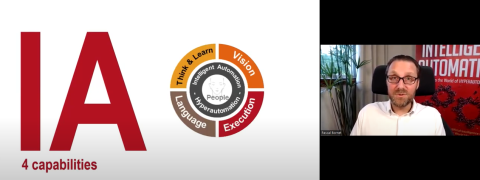
    Artificial intelligence (AI) and intelligent automation (IA) are creating significant opportunities for organizations and individuals and are shaping the future of professional accountants as leaders and business partners.

    Digital transformation based on intelligent automation can drive business growth and customer and employee satisfaction.

    To provide in-depth insights about AI and IA and consider their impact on the work of accounting and finance professionals, IFAC’s Professional Accountants in Business (PAIB) Advisory Group received a presentation from Pascal Bornet, IA pioneer and CPA, and have shared a recording and takeaways from the discussion.

    Image
    pascal-bornet-ia

    Explore takeaways from the presentation and watch the recording to learn some of the opportunities opening to accounting and finance professionals who embrace AI and IA.

    About IFAC

    IFAC is the global organization for the accountancy profession dedicated to serving the public interest by strengthening the profession and contributing to the development of strong international economies. IFAC is comprised of 180 members and associates in more than 135 jurisdictions, representing millions of professional accountants in public practice, education, government service, industry, and commerce.

    Disrupting Business; Elevating the Work of Accounting & Finance Professionals

  • IPSASB Issues Exposure Draft (ED) 85, Improvements to IPSAS, 2023

    New York, NY
    English

    The International Public Sector Accounting Standards Board® (IPSASB®) has issued Exposure Draft (ED) 85, Improvements to IPSAS, 2023.

    ED 85 proposes minor improvements to accrual basis IPSAS that arise through publications of the International Accounting Standards Board (IASB). The proposals in this exposure draft may be modified in light of comments received before being issued in final form. Comments are due by December 18, 2023 and must be submitted in English. 

  • New Edition of the IAASB Handbook Now Available on the IAASB Website & for Print Orders

    New York, New York English

    The IAASB has released the 2022 edition of the Handbook of International Quality Management, Auditing, Review, Other Assurance, and Related Services Pronouncements, which includes:

    • IAASB’s new and revised suite of quality management standards:
      • International Standard on Quality Management (ISQM) 1, Quality Management for Firms that Perform Audits or Reviews of Financial Statements, or Other Assurance or Related Services Engagements
      • ISQM 2, Engagement Quality Reviews
      • International Standard on Auditing (ISA) 220 (Revised), Quality Management for an Audit of Financial Statements
      • Conforming and Consequential Amendments to Other ISAs Arising from the Quality Management Project
      • Conforming and Consequential Amendments to the IAASB’s Other Standards as a Result of the New and Revised Quality Management Standards
    • International Standard on Related Services (ISRS) 4400 (Revised), Agreed-Upon Procedures Engagements

    The following standards, which are not yet effective for this version of the handbook, have been included in the back of Volume 1:

    • ISA 600 (Revised), Special Considerations—Audits of Group Financial Statements (Including the Work of Component Auditors)
    • Conforming and Consequential Amendments to Other International Standards arising from ISA 600 (Revised)

    Volumes 1, 2 and 3 of the handbook can be downloaded from the IAASB website, where users can also order print copies of the three-volume handbook.

    The vendor for the e-International Standards (eIS) online platform is experiencing technical difficulties in finalizing the IAASB eIS handbook. In the interim, please refer to the PDF versions of the handbook. We apologize for any inconvenience caused.

    Reproducing and Translating the IAASB Handbook

    To help adoption and implementation of the IAASB standards, stakeholders are invited to request permission to reproduce or translate the IAASB handbook via the Online Permissions Requests or Inquiries system on the IFAC website.

    About the IAASB
    The International Auditing and Assurance Standards Board develops auditing, assurance, related services, and quality management standards and guidance in the public interest that support consistent performance of quality engagements. Along with the International Ethics Standards Board for Accountants, the IAASB is part of the International Foundation for Ethics and Audit. The Public Interest Oversight Board oversees IAASB and IESBA activities and the public interest responsiveness of the standards. For copyright, trademark, and permissions information, please visit Permissions.

  • New ISSA 5000 Developments: Engage, Learn, and Share Insights

    New York, New York English

    The IAASB is holding a range of engaging webinars and events to enhance understanding of the newly proposed International Standard on Sustainability Assurance (ISSA) 5000, General Requirements for Sustainability Assurance Engagements—and encourage participation in the public consultation.

    1. Amplified Engagement through Stakeholder Survey: Recognizing the diverse perspectives and levels of expertise within our stakeholder community, an alternative avenue for feedback has been developed. In addition to the comprehensive Explanatory Memorandum and Response Template, the IAASB has created a stakeholder survey. This user-friendly tool allows the IAASB to obtain the views of stakeholders who may not ordinarily respond to IAASB consultations, including preparers of sustainability information, those with the oversight of its preparation, investors and other users of the sustainability information, sustainability reporting standard setters and members of the academic community. Survey responses will be aggregated and analyzed in conjunction with other feedback received.

    2. Webinars for Enhanced Understanding: Learn more about ISSA 5000 at these dedicated IAASB webinars for practitioners and regulators, offered at two different times to allow for global participation.

    3. Empowering Global Exchange at Notable Events: Mark your calendars for these events that offer opportunities for learning, sharing, and networking.

    • Corporate Disclosures webinar: Introducing a new global standard for sustainability assurance
    • IFAC Sustainability Summit–Asia Pacific: A collaborative endeavor with the ASEAN Federation of Accountants, Confederation of Asian and Pacific Accountants, South Asian Federation of Accountants, and Jeju Group.
      • Dates & Times:
        • September 27, 8:30-10:30 am Mumbai / 1:00-3:00 pm Melbourne / 10:00 am-12:00 pm Jakarta / 11:00 am-1:00 pm Singapore / 12:00-2:00 pm Tokyo / 4:00-6:00 am London / 11:00 pm-1:00 am New York
        • September 28, 10:30 am-1:00 pm Mumbai / 3:00–5:30 pm Melbourne / 12:00-2:30 pm Jakarta / 1:00-3:30 pm Singapore / 2:00-4:30 pm Tokyo / 6:00-8:30 am London / 1:00–3:30 am New York
    • IFAC & Accountancy Europe In-Person Event: Preparing for High-Quality Sustainability Assurance Engagements
      • Date, Time & Location: October 3 at 2 pm CEST in Brussels
      • Register Here

    For further details and updates, visit the IAASB website: iaasb.org/ISSA5000