Africa’s development is reliant upon the involvement of accounting and finance professionals. Working in both private and public sectors, they play a crucial role in driving sustainable growth across the continent. Whether serving on corporate boards, as CFOs, or as business advisors, they can help tackle challenges, such as climate change impacts, energy accessibility issues, regional disparities and disconnection, economic growth, and public debt.
IFAC's Financial Statements are prepared in accordance with International Public Sector Accounting Standards (IPSAS) and include an independent auditor’s report.
The International Federation of Accountants (IFAC) has unveiled proposed changes to the International Education Standards (IESs) that embed sustainability—from analysis to reporting to assurance—across aspiring professional accountants’ training.
IFAC CEO Lee White emphasized the significance of the proposed changes, stating, “Investors and other stakeholders need sustainability reports and disclosures that are on par with the high-quality, decision-useful financial reports that accountants already deliver. To be future-fit, accountants must develop the right competencies to meet this need. The proposals provide a robust framework for the profession to develop capable accountants who produce, report, and assure sustainability information.”
Key proposals include:
Emphasizing working with experts and in multi-disciplinary teams;
Introducing key sustainability reporting concepts, such as systems thinking, value chains and scenario analysis;
Referencing relevant sustainability reporting and assurance standards; and
Creating a new assurance competence area and learning outcomes.
Additionally, IFAC has proposed changes to IES 6, Initial Professional Development – Assessment of Professional Competence, to modernize the standard to align with current good practice and clarify previously-existing requirements. This includes introducing new principles emphasizing integrity, authenticity, equity, and inclusion. These changes will aid professional accountancy organizations, universities, and training programs in evaluating candidates’ readiness for the professional accountant role.
IFAC encourages all stakeholders to provide feedback on both set of proposed changes by July 24, 2024, usingthe Response Templates available on the IFAC website.
About IFAC IFAC is the global organization for the accountancy profession dedicated to serving the public interest by strengthening the profession and contributing to the development of strong international economies. IFAC is comprised of 180 members and associates in more than 135 jurisdictions, representing millions of professional accountants in public practice, education, government service, industry, and commerce.
Changes Also Proposed to Modernize Standard on Assessing Professional Competence
Global Perspectives on Achieving the SDGs with Islamic Finance Tools & Concepts
With the deadline for the 2030 Sustainable Development Goals (SDGs) looming, the world is under increased pressure to accelerate efforts and deploy innovative solutions to meet the SDGs. Islamic finance is one of the critical solutions to mobilize funding towards achieving the SDGs.
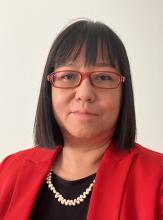
With more than 30 years of experience, Josephine Su Han Phan provided assurance and advisory services to clients in various countries on their IT systems, internal controls, and financial processes before retiring as a Partner at PricewaterhouseCoopers Malaysia. She has worked in financial statutory audits, IT governance, internal and external IT audits, information security, IT risk and regulatory compliance, as well as IT and operational due diligence.
Mrs. Phan is currently a non-executive independent director on the board of directors and is involved in board committees for two publicly listed corporations in Malaysia. She has previously been the President of CPA Australia (Malaysia Division), Vice President of Information Systems Audit and Control Association (Malaysia Chapter), Member of the Malaysian Institute of Accountants (MIA) Auditing and Assurance Standards Board, Member of the MIA Disciplinary Appeal Board, and Member of the CPA Australia Board Nomination Committee.
Mrs. Phan is a member of both the MIA Education Board and the MIA Digital Technology Implementation Committee. She contributes as a panel member to the evaluation of local universities' accounting degrees for accreditation by MIA.
Mrs. Phan graduated from Monash University (Melbourne, Australia) with a Bachelor of Economics in Accounting and Computer Science. She is a Fellow Certified Practicing Accountant (CPA Australia) and a Chartered Accountant (MIA).